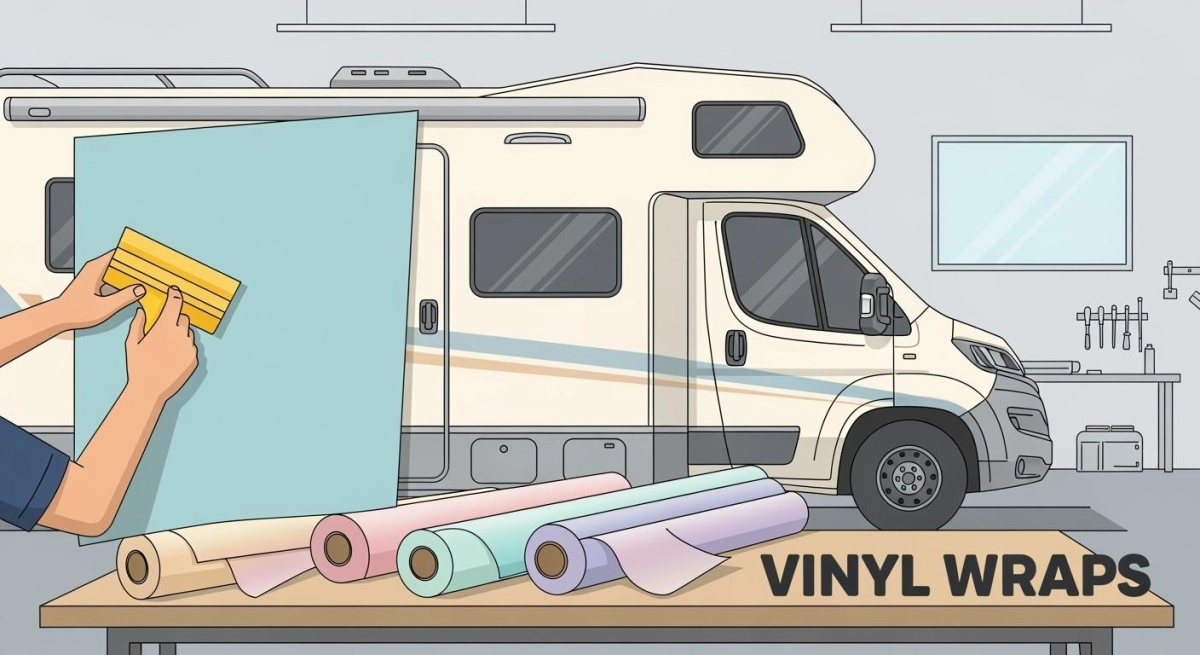
If you want the best results for your camper wraps, You need to read the following articles. After reading this, you'll know how to choose the best wrap for your camper.
Essential Features for Quality Camper Wraps
Beyond the base vinyl, you need to look for specific features. These technologies make installation easier and ensure your wrap lasts for years. They separate a professional-grade product from a standard decal.
Protective Overlaminate
You should think of an overlaminate as a clear, protective shield for your printed graphics. It is a separate layer applied over the vinyl. This layer is designed to shield your wrap from the elements and prolong its life. It provides extra protection against daily wear and tear, like minor scuffs and scratches.
The finish of the overlaminate also determines the final look of your camper. You can choose between two main types: gloss and matte. Each has unique properties.
Gloss vs. Matte Overlaminates
| Feature | Gloss Finish | Matte Finish |
|---|---|---|
| Appearance | Shiny, vibrant, and reflective | Non-reflective, modern, and subdued |
| Cleaning | Easy to clean and rinses well in rain | Can be more porous, may hold dirt |
| Scratches | More resistant to scuffs | Scratches and fingerprints are less visible |
| Durability | Highly durable and moisture-resistant | Can turn shiny in high-friction areas |
Air-Egress Technology
Air-egress technology is a game-changer for vinyl installation. It features tiny, invisible air channels in the adhesive layer. These channels allow you to easily push out trapped air bubbles during application. This feature makes the installation process faster and more forgiving.
This technology significantly increases productivity and reduces application time. You will find it much easier to achieve a smooth, professional finish. Key benefits include:
- Quickly eliminate bubbles and wrinkles. The air channels give trapped air an escape route.
- Effortlessly slide and reposition graphics. The vinyl "floats" on the surface until you apply firm pressure.
- Enable fast wraps with just one installer. The ease of use can reduce labor needs for your project.
Long-Term Removable Adhesive
The adhesive is what holds your wrap to the camper. For high-quality camper wraps, you need a long-term removable adhesive. This type of adhesive is strong enough to last for years but can be removed cleanly without damaging the paint underneath. Most premium brands offer a warranty of three to five years on their films and adhesives.
Temperature plays a critical role in the adhesive's performance. Both application and removal are affected by the weather.
Ideal Temperature Range: 60°F to 80°F (15°C to 26°C) You should always apply vinyl within this temperature window. In the cold, adhesive becomes stiff and will not bond properly. In extreme heat, the vinyl can overstretch and the adhesive can become too soft.
Removing old vinyl in the cold is also challenging. The adhesive becomes hard and brittle. This can cause the vinyl to splinter and leave behind a lot of residue. Applying gentle heat with a steamer or heat gun can soften the adhesive, making removal much easier.
Choosing Vinyl for Your Specific Project
You need to match the vinyl choice to your project's scope and your installation plan. Your decision between a full or partial wrap and a DIY or professional job will guide your material selection.
Full vs. Partial Wraps
Your budget and design goals will determine whether you choose a full or partial wrap. A full wrap covers your entire camper for a complete transformation. A partial wrap is a cost-effective way to add custom style. You can apply graphics to specific areas like the hood, roof, or side panels for a unique look.
Cost is a major factor. Full wraps are a significant investment, while partial wraps offer a more budget-friendly alternative.
| Wrap Type | Typical Cost Range |
|---|---|
| Full Wrap | $2,000 to $7,000+ |
| Partial Wrap | $500 to $3,000 |
Partial camper wraps allow for creativity. You can add accent stripes, wrap just the rear for advertising, or combine roof and side panel designs for a custom appearance.
DIY vs. Professional Installation
You can install a wrap yourself or hire a professional. A DIY installation can save money, but it requires patience, precision, and the right tools. Professional installers have the experience to deliver a flawless finish, especially with premium cast vinyl on complex curves.
If you attempt a DIY project, you must avoid common mistakes.
A successful DIY wrap depends on careful work. You must prepare the surface properly, use a heat gun correctly, and avoid overstretching the vinyl. Skipping the final post-heating step can also cause the wrap to peel prematurely.
For large or complex jobs, a professional installer is often the best choice to protect your investment and ensure a durable result.
For durable, long-lasting camper wraps, you can choose ravoony car wrap. It offers superior conformability and can last 3–5 years. The Ravoony Plus PET Satin Black Car Wrap, a satin car wrap, is a good choice for you to wrap your camper.
FAQ
What is the best vinyl for a full camper wrap?
You should choose a premium cast vinyl with a protective overlaminate. This combination offers the best durability and conforms perfectly to your camper's curves for a professional, long-lasting finish.
Can you use calendared vinyl on a camper?
Yes, you can use calendared vinyl for specific projects. It works well for partial wraps on flat surfaces, simple logos, or short-term graphics. Avoid using it on complex curves.
Do you need an overlaminate for your wrap?
You should always use an overlaminate on printed graphics. It acts as a shield, protecting your wrap from UV fading, minor scratches, and daily wear to extend its life.
0 Comments